AAA Landscaping Suggestions for Modern Outdoor Staying In Denver
Denver yards have a personality of their own. They sit under a sharp blue sky, deal with sudden spring snow, bake through dry July afternoons, and often have a view worth framing instead of hiding. A good outdoor space here cannot simply copy a coastal patio from a magazine or a lush Midwestern lawn plan. It has to understand altitude, sun, clay soil, water rules, temperature swings, and the way people actually live along the Front Range.
That is where thoughtful landscaping in Denver starts to feel less like decoration and more like design for real life. The best modern outdoor spaces are not overbuilt. They are comfortable, durable, water-wise, and flexible enough to handle a quiet coffee at sunrise, a family dinner in the evening, and a backyard full of neighbors after a Broncos game.
AAA Landscaping has seen Denver homeowners ask for a clear shift over the last several years. People still want curb appeal, of course, but they also want usable outdoor rooms, lower maintenance plantings, better shade, smarter irrigation, and landscapes that feel calm rather than fussy. Modern outdoor living in Colorado is not about stripping everything down to concrete and gravel. It is about choosing the right materials, the right plants, and the right layout so the yard works beautifully without demanding every weekend in return.
What modern outdoor living means in Denver
Modern landscape design gets misunderstood sometimes. People hear “modern” and picture a cold space with square concrete slabs, steel planters, and not much green. That can be one version, but it is not the version most Denver homeowners end up loving.
A modern Denver yard is usually more about clean organization than a strict style. It may include native grasses moving in the wind, a simple paver patio, a fire feature, a small lawn patch for kids or dogs, and layered planting beds that bloom at different times. The lines might be crisp, but the space should still feel alive.
The best Denver landscaping services take cues from the house, the neighborhood, and the site. A mid-century home in Virginia Village can handle broad concrete pads, ornamental grasses, and horizontal fencing. A brick bungalow in Park Hill often feels better with natural stone, curved planting beds, and a relaxed mix of perennials. A newer home in Central Park may need privacy, shade, and a layout that softens the scale of the architecture.
Modern does not mean trendy. It means useful, edited, and intentional.
One of the biggest differences between an average yard and a well-designed one is how the space is divided. A flat rectangle of grass with a fence around it gives you one use. A yard with a dining area, a path, a few shade trees, a planting border, and a small open area gives you several uses without necessarily costing much more. Denver landscape contractors often call this creating outdoor rooms, but it does not have to feel formal. It can be as simple as placing a patio where the evening shade falls and using shrubs or grasses to create a sense of enclosure.
Designing for Denver’s climate instead of fighting it
Colorado landscaping rewards people who pay attention. The climate is generous in some ways, especially with sunshine, cool evenings, and a long shoulder season when patios are pleasant. But it is not forgiving when a design ignores water, exposure, or soil.
Denver sits in a semi-arid climate. Annual precipitation varies, but it is not enough to support thirsty landscapes without supplemental irrigation. Many yards also have compacted clay soils that drain slowly in some places and turn hard as pottery in others. Add hail, freeze-thaw cycles, chinook winds, and intense UV exposure, and you quickly learn why plant selection and construction details matter.
A common mistake is choosing plants based only on how they look at the nursery in May. A plant can look lush in a one-gallon pot and still struggle through its first Denver winter if it wants richer soil or steadier moisture than the site provides. Another mistake is designing every planting bed the same way. The south side of a house can behave like a different climate zone than the north side. A west-facing fence line may roast in late afternoon, while a narrow side yard may stay cool and shaded until midsummer.
Experienced denver landscape contractors think in microclimates. They notice where snow lingers, where runoff collects, where wind tunnels between houses, and where the dog has already created a preferred route. These small observations keep a design from looking good for one season and then slowly falling apart.
For hardscape, climate matters just as much. Pavers, retaining walls, steps, and patios need proper base preparation because Denver’s freeze-thaw cycles can shift poorly built surfaces. A beautiful patio that puddles near the foundation or heaves after two winters is not a bargain. Good construction is often invisible, but it is what keeps the space usable year after year.
The patio as the anchor of the yard
Most modern outdoor living plans begin with the patio because it anchors how people move and gather. In Denver, a patio usually works harder than a deck. It handles dining furniture, grills, planters, fire pits, and foot traffic without the maintenance that wood often requires. That said, not every patio should be huge.
A patio should fit the way the homeowner entertains. A couple who mostly drinks coffee outside and grills on weekends may need less space than a family that hosts twelve people every Friday night. For a dining table and chairs, a comfortable patio often needs at least 10 by 12 feet, and larger tables need more room for chairs to slide back without dropping into planting beds. A grill station needs clearance and sensible access from the kitchen. A fire pit area needs room for seating, circulation, and safe distance from structures and overhanging branches.
Material choice shapes the whole mood. Concrete can look clean and modern, especially with saw-cut joints and a warm gray finish. Pavers offer flexibility and are easier to repair if settling happens. Natural stone gives a timeless Colorado feel, though it can vary more in surface texture and cost. Porcelain pavers have gained attention for a sleek look, but installation details and slip resistance deserve careful discussion before choosing them.
A good landscaper in Denver will also talk about sun exposure before placing the patio. People often assume the patio belongs directly outside the back door. Sometimes it does. Other times, that location is brutally hot at 5 p.m. In July. Moving the main seating area ten or fifteen feet into a better microclimate can make the difference between a patio that gets used daily and one that looks nice from the kitchen window.
Shade is not optional here
Denver sunshine is one of the city’s great pleasures, but a modern outdoor space needs shade to be comfortable. Without it, even the nicest patio can feel like a skillet during summer afternoons.
Shade can come from trees, pergolas, shade sails, umbrellas, or the house itself. Each option has trade-offs. Trees are the most beautiful long-term solution, and they cool the surrounding area in a way a structure cannot. But they take time, need space, and require thoughtful placement away from utilities, foundations, and narrow side yards. Pergolas create structure immediately and can define an outdoor room, but an open-slat pergola may provide less shade than people expect unless it is designed with sun angle in mind. Shade sails can work well in modern yards, though they need strong anchor points and seasonal care. Umbrellas are flexible, but Denver wind can be rough on cheap ones.
For many homes, a combination works best. A patio might have a pergola for structure, a deciduous tree planted nearby for long-term cooling, and a movable umbrella for the hot seat at the edge of the table. That layered approach feels less rigid and performs better through the season.
Tree selection should not be rushed. Denver has lost and continues to manage threats to urban canopy from pests, drought stress, and age. Diversity matters. Depending on the site, homeowners might consider trees such as bur oak, Kentucky coffeetree, hackberry, honeylocust, or certain maples, though every choice should be matched to space, soil, water availability, and local recommendations. Smaller ornamental trees can also be useful where space is tight, but they should still be chosen for resilience, not just spring flowers.
Water-wise planting that still feels lush
Some people hear water-wise and picture a yard covered in rock with three lonely yuccas. That version is easy to install and often disappointing to live with. Rock-heavy yards can radiate heat, collect debris, and look harsh when not balanced with enough plant material.
Better water-wise landscaping Denver homeowners tend to love uses plants with texture, movement, and seasonal change. Ornamental grasses, flowering perennials, tough shrubs, and carefully placed evergreens can create a full, inviting landscape while using less water than a traditional lawn-heavy yard.
The trick is hydrozoning, which means grouping plants by water needs. Thirstier plants belong together in limited areas where irrigation can support them efficiently. Drought-tolerant plants belong in broader beds where they can thrive with less frequent watering once established. This sounds basic, but it is one of the places where many DIY projects go sideways. A lavender planted next to a hydrangea leaves one of them unhappy because they want different conditions.
Plant spacing also requires patience. New landscapes can look sparse at first, especially when installed correctly for mature size. It is tempting to pack plants close together for an instant full look, but overcrowding creates maintenance headaches two or three years later. Airflow drops, plants compete, and pruning becomes constant. A good denver AAA landscaping company should be honest about that early grow-in period and help the homeowner understand what the bed will look like in year one, year three, and year five.
There are many plants that can work well in Denver landscapes when placed properly. Choices often include Russian sage, catmint, penstemon, salvia, yarrow, blue grama grass, switchgrass, little bluestem, serviceberry, rabbitbrush, Apache plume, and various sedums. Not every plant belongs in every yard, and local regulations, exposure, wildlife pressure, and soil conditions all matter. Still, the plant palette is broader than many people think.
A modern planting design often repeats a smaller number of plants rather than using one of everything. Repetition calms the eye. Three sweeps of ornamental grass, a drift of purple salvia, and a few structural shrubs usually look stronger than twenty unrelated plants scattered around a bed. Denver landscaping benefits from that restraint because the surrounding environment already has plenty of drama.
Rethinking the lawn without declaring war on it
Lawns are not automatically bad. They are useful for kids, dogs, casual games, and the visual rest that a simple green panel provides. The issue is size and placement. A lawn that nobody uses, sitting in full sun and requiring constant irrigation, may not be earning its keep. A smaller lawn placed where it serves a real purpose can be completely reasonable.
Modern denver landscaping services often reduce turf rather than remove it entirely. A backyard that once had 1,500 square feet of grass might be redesigned with a 500-square-foot lawn, a larger patio, widened planting beds, and a path to a seating nook. The yard becomes more useful and often more attractive, while water and mowing demands drop.
Dog owners need special judgment here. Artificial turf is popular, but it is not magic. It can heat up in intense sun, needs proper base and drainage, and requires cleaning to manage odor. Natural turf can struggle with urine spots and traffic patterns, especially in small yards. Sometimes the best answer is a hybrid layout with a durable dog run surface in one zone, a smaller lawn in another, and plantings protected from the main traffic route.
For front yards, turf conversion can dramatically change curb appeal. A well-designed front landscape with low-water plants, boulders, mulch, and a clean walkway can look more polished than a struggling lawn. But the design needs enough living material. Too much gravel across a broad front yard often feels unfinished, especially in older Denver neighborhoods with mature trees and traditional architecture.
Outdoor kitchens, fire features, and the question of how much is enough
Outdoor features can make a yard feel special, but they should match real habits. An outdoor kitchen sounds great until you realize the indoor kitchen is ten steps away and the family mostly grills burgers twice a month. In that case, a built-in grill island might be less valuable than a larger dining patio, better lighting, and a shade structure.
For serious cooks, though, a well-planned outdoor kitchen can be worth it. The best ones include landing space on both sides of the grill, storage for tools, durable counters, and a layout that keeps smoke away from seating areas when possible. Gas lines, permits, clearances, and winterizing all need professional attention.
Fire features are especially popular in Denver because evenings cool down quickly, even after hot days. A gas fire pit offers convenience and clean operation. A wood-burning feature gives atmosphere but brings smoke, ash, storage, and local restrictions into the conversation. Placement matters. A fire feature jammed into the corner because it looked good on a plan may feel awkward when six people are trying to sit around it.
The same “how much is enough” question applies to built-in benches, water features, hot tubs, and pergolas. Every feature adds cost, maintenance, and sometimes complexity. That does not mean you should avoid them. It means each one should earn its place.
A simple way to test an idea is to ask how often it will be used in a normal month, not on an imaginary perfect weekend. If the answer is often, build it well. If the answer is rarely, spend the money on the parts of the yard you touch every day.
Lighting that makes the yard work after sunset
Outdoor lighting is one of the most underrated parts of landscape services Denver homeowners request. It is also one of the easiest places to overdo things. The goal is not to flood the yard with brightness. The goal is to make movement safe, highlight the best features, and create a warm atmosphere.
Path lights should guide without looking like a runway. Step lights should prevent trips. Downlighting from trees or structures can mimic moonlight when done carefully. Uplighting can show off a specimen tree or textured wall, but too much uplighting feels theatrical. Warm color temperatures usually look better in residential landscapes than cool, bluish light.
Modern lighting systems often use LEDs and timers or smart controls, which help with energy use and convenience. Fixture quality matters because Denver weather is hard on cheap metal and plastic. A fixture that looks like a bargain at installation may lean, corrode, or fail faster than expected.
Lighting should be planned with planting growth in mind. A light aimed at a young tree may need adjustment as the canopy develops. Fixtures placed too close to Denver landscaping ornamental grasses may disappear by August. Good landscape maintenance Denver crews notice these details during seasonal visits and make small adjustments before the system starts looking messy.
Privacy without building a fortress
Denver lots vary widely, but many homeowners deal with close neighbors, alley exposure, or second-story views into the backyard. Privacy is one of the top reasons people call a landscaper Denver homeowners trust. The challenge is creating screening without making the yard feel boxed in.
Fences help, but they are not the only tool. Trees, shrubs, trellises, pergolas, screens, and grade changes can all create privacy. Often the most comfortable solution is partial screening. You may not need to block every view. You may only need to screen the neighbor’s kitchen window from your dining table or soften the alley view from the patio.
Evergreens are useful, but they need enough space and the right conditions. Some grow too large for narrow Denver lots. Others struggle in reflected heat or drying wind. Deciduous shrubs can still provide strong seasonal privacy, especially when outdoor living is concentrated in warmer months. Ornamental grasses can create quick summer screening, though they will be cut back in late winter or early spring.
Privacy screens made from wood, steel, or composite materials can look sharp in modern landscapes. They work best when integrated into the design rather than added as an afterthought. A screen behind a bench, a trellis with vines near a dining area, or a horizontal fence softened by shrubs usually feels more inviting than a tall blank wall.
Materials that fit Colorado homes
The materials in a landscape should feel connected to the region and the house. Denver has a broad mix of architecture, from historic brick homes to sleek new builds, so there is no single correct palette. Still, certain materials tend to feel at home here.
Natural stone has a strong connection to Colorado landscaping. Buff flagstone, sandstone, moss rock, granite boulders, and other regional materials can add warmth and permanence. Steel edging and planters bring a clean modern line and weather into a natural patina if left untreated. Concrete, when detailed well, can look understated and contemporary. Wood adds warmth but needs realistic maintenance expectations in Denver’s sun.
Mulch choice matters more than many people think. Organic mulch helps moderate soil temperature and improve soil over time as it breaks down. Rock mulch can be appropriate in some low-water beds and windy areas, but it can increase heat around plants and does nothing to build soil. Many successful designs use both, depending on the zone.
Boulders deserve restraint. A few well-placed boulders can anchor a planting bed and make a landscape feel settled. Too many small boulders sprinkled around can look artificial. In natural settings, rocks have relationships to grade, drainage, and each other. Good placement tries to honor that.
A practical planning checklist before calling a contractor
Before reaching out to landscape companies Denver homeowners often benefit from taking a slow walk through the yard at different times of day. The goal is not to design everything yourself. It is to understand what you like, what annoys you, and how the space behaves.
- Notice where the sun hits in the morning, midday, and late afternoon.
- Write down how you actually want to use the yard, including dining, pets, kids, gardening, and quiet seating.
- Identify drainage issues, icy spots, dead zones, and places where plants keep failing.
- Decide which views you want to frame and which ones you want to screen.
- Set a realistic budget range, with some flexibility for phasing if needed.
That short exercise makes the first conversation with denver landscape contractors much more productive. It also helps prevent the design from being driven only by pretty photos. Inspiration images are useful, but your yard has the final vote.
Phasing a landscape without making it feel unfinished
Many homeowners cannot or do not want to build the entire landscape at once. That is normal. A good plan can be phased over two or three seasons as long as the sequence is logical.
The first phase usually should include grading, drainage, major hardscape, utility runs, irrigation infrastructure, and any elements that would be difficult to add later without tearing things up. It is frustrating to install a beautiful planting bed and then trench through it the next year for lighting or gas. Patios, retaining walls, main paths, and irrigation sleeves often belong early in the process.
Planting can sometimes be phased more easily. Trees should often go in sooner because they need time to grow. Perennials and smaller shrubs can be added in later waves. Lighting can be roughed in early and expanded later if conduits or sleeves are planned. Features like outdoor kitchens or pergolas may be delayed if their foundations and utility needs are considered upfront.
A phased project should still have a master plan. Without one, each year’s improvement may solve one problem while creating another. This is where working with AAA Landscaping or another experienced denver AAA landscaping company can save money over time. The plan keeps decisions connected even when the work happens gradually.
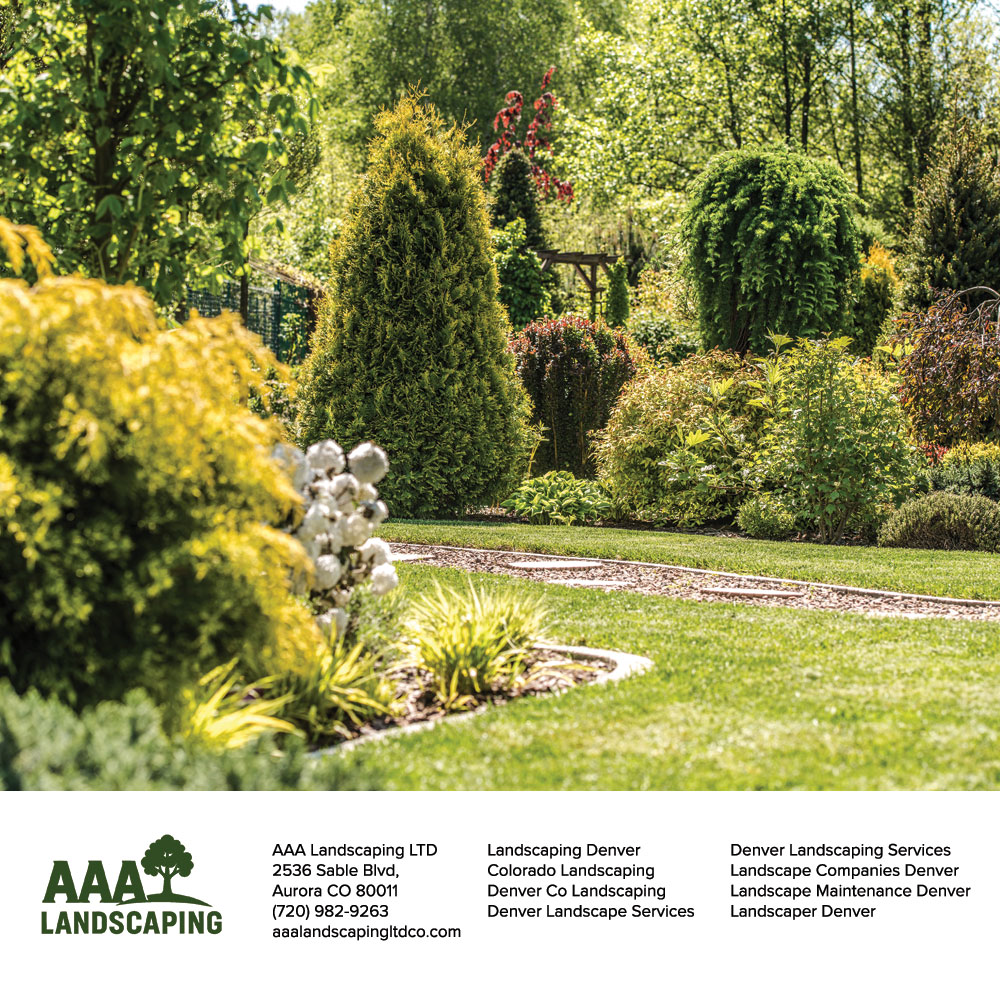
Maintenance is part of the design, not an afterthought
Every landscape needs maintenance. The question is what kind and how much. A low-maintenance landscape is not a no-maintenance landscape, especially in Denver where weeds, irrigation adjustments, storm cleanup, pruning, and seasonal cutbacks all matter.
Design choices shape maintenance for years. A large lawn means mowing, edging, watering, aeration, and fertilization. A perennial-heavy garden means seasonal cutbacks and periodic division. Shrub-heavy designs may need pruning, but less frequent replanting. Rock mulch may reduce some tasks but can collect leaves and allow weeds to root in blown-in dust. Artificial turf removes mowing but adds cleaning and heat considerations.
Good landscape maintenance Denver services include more than showing up with a mower. They watch irrigation coverage, check plant health, adjust watering schedules, clean up beds, manage weeds before they seed, and prune at the right time. Timing matters. Pruning spring-blooming shrubs at the wrong moment can remove flower buds. Cutting ornamental grasses too early or too late changes winter interest and spring cleanup.
Homeowners who want a relaxed yard should be honest about how much work they enjoy. Some people love deadheading flowers and tinkering with vegetables. Others want the yard to look good with professional visits and minimal weekend effort. Both are valid. The design should reflect the person who lives there, not an idealized gardener who does not exist.
What to expect when working with Denver landscape professionals
Choosing among landscape companies Denver has to offer can feel overwhelming because services vary so much. Some companies focus on landscape services Denver maintenance. Others specialize in design-build projects, irrigation, hardscape, or planting. The right fit depends on the size and complexity of the work.
For a full outdoor living project, look for a team that asks detailed questions before offering answers. They should want to know how you use the yard, what problems you have, what budget range makes sense, and whether you expect the work to happen all at once or in phases. They should also be willing to talk through trade-offs. If every idea is treated as easy and every material is described as perfect, be careful. Real landscapes involve choices.
Clear proposals matter. You should understand what is included, what is excluded, what materials are being used, and how changes will be handled. If irrigation, drainage, lighting, permits, or demolition are involved, those details should not be vague. Denver landscape services AAA Landscaping provides should be grounded in site conditions, not just square-foot pricing pulled from thin air.
Communication during construction matters too. Outdoor projects can uncover surprises, including buried debris, poor soil, old irrigation lines, unexpected roots, or drainage issues hidden by the previous landscape. A professional crew handles those moments by explaining the issue, offering options, and documenting changes.
The cheapest bid is not always the best value. Sometimes it is cheaper because the scope is thinner, the base preparation is lighter, or important details are missing. That does not mean the highest bid is automatically best. It means homeowners should compare scope, experience, materials, and communication, not just the final number.
Small yards can live large
Not every Denver property has room for a sweeping patio, lawn, garden, and fire lounge. Many modern homes have compact backyards, and older neighborhoods often have narrow lots. Small spaces can still be excellent if the design is disciplined.
In a small yard, every inch needs a job. Built-in seating can save space around a dining area. A narrow planting bed with upright shrubs or grasses can soften a fence without swallowing the patio. Large-format pavers can make a small space feel calmer than a busy pattern of tiny units. One well-placed tree may do more than five shrubs. Storage should be planned early because bikes, cushions, tools, and kids’ toys can overwhelm a compact space fast.
Vertical elements help. A trellis, vine-covered screen, wall planter, or slim ornamental tree draws the eye upward and makes the space feel more layered. Lighting also expands a small yard at night by giving depth to corners that would otherwise disappear.
The biggest small-yard mistake is trying to fit every feature from a large-yard wish list. A tiny fire pit, tiny lawn, tiny kitchen, and tiny dining area can feel cluttered. One generous patio with beautiful planting and good lighting may serve better than four cramped zones.
Front yards deserve more attention
Backyards get most of the outdoor living attention, but front yards shape daily experience too. A front landscape can create a welcoming entry, improve drainage, reduce water use, and add beauty to the whole block.
Modern front yard design in Denver often starts with the walkway. Many older homes have narrow concrete walks that force visitors into single file and do little for curb appeal. Widening or rerouting the path can make the entry feel intentional. Adding planting depth near the porch softens the house. A small seating area in the front can be surprisingly pleasant, especially in neighborhoods where people walk dogs and chat from the sidewalk.
Front yards also handle snow storage, delivery routes, trash day movement, and visibility for driveways. These practical details should shape the design. A gorgeous planting bed that gets buried under shoveled snow mixed with ice melt may struggle. Tall grasses planted at a driveway corner may block sightlines. A low-water design still needs to function in winter.
Denver landscaping at the front of a home should also respect neighborhood character. A bold modern design can look great, but it should feel connected through materials, scale, or plant choices. The best front yards stand out quietly.
A few design combinations that work well in Denver
Some landscape ideas show up again and again because they fit Denver living. They are not formulas, but they are reliable starting points.
- A concrete or paver dining patio paired with a pergola, warm lighting, and drought-tolerant planting beds.
- A reduced lawn framed by native grasses, flowering perennials, and a simple gravel or flagstone path.
- A front yard turf conversion using boulders, low-water shrubs, organic mulch, and a wider entry walk.
- A fire pit lounge placed away from the house, with partial privacy screening and movable seating.
- A small backyard design with built-in benches, one shade tree, vertical screens, and layered lighting.
Each of these can be dressed up or simplified. The success comes from proportion, placement, and execution rather than the feature list itself.
The quiet value of a yard that feels easy
The best landscapes often do not shout. They just work. The gate opens smoothly. The path makes sense. The patio has shade when you need it. The plants look good without constant fussing. The irrigation runs efficiently. The lighting makes the yard feel welcoming after dinner. The dog has a route. The kids have a patch of open space. The adults have a place to sit that is not an afterthought.
That kind of ease is designed. It comes from understanding Denver’s climate, listening to how people live, and building with enough care that the landscape can settle in and mature.
AAA Landscaping approaches modern outdoor living with that balance in mind. A yard should look good in photos, but more importantly, it should feel good on a Tuesday evening when the grill is on, the air cools down, and the sky turns pink over the rooftops. Whether you are planning a full renovation, looking for denver landscaping services, comparing landscape companies Denver residents recommend, or simply trying to make a tired yard more livable, the smartest ideas start with the same question.
How do you want to live outside?
Once that answer is clear, the design has a direction. The patio, plants, paths, shade, lighting, and maintenance plan can all support it. That is when landscaping becomes more than a project. It becomes part of the rhythm of home.
AAA Landscaping LTD
2536 Sable Blvd, Aurora, CO 80011
(720) 982-9263
https://www.aaalandscapingltdco.com/
https://www.yelp.com/biz/aaa-landscaping-aurora